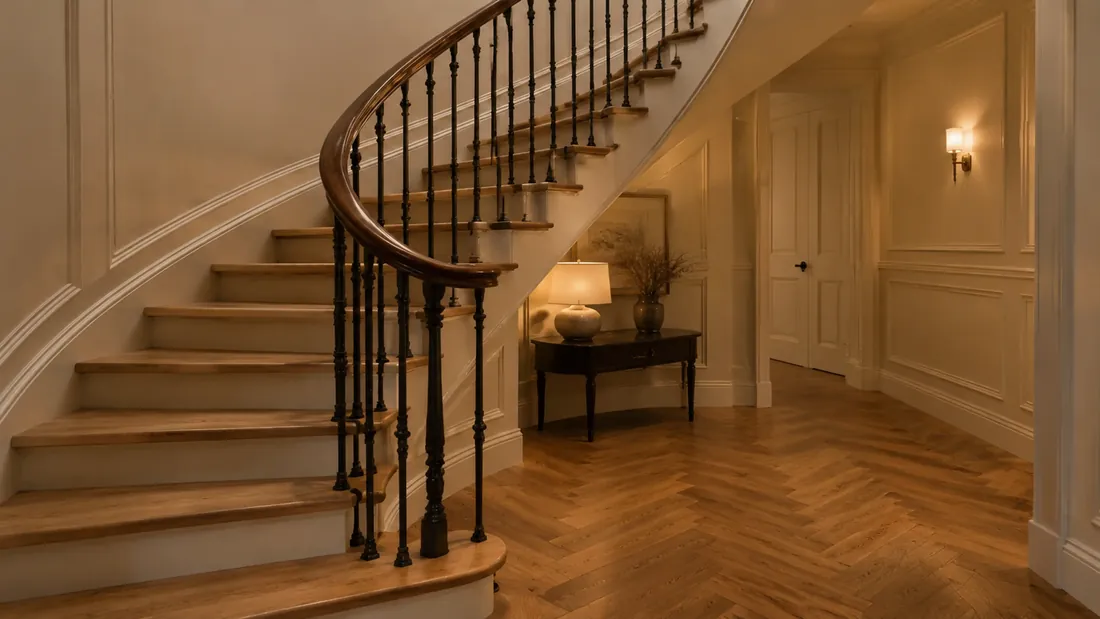
A practical guide to fitting real wood over wet or electric underfloor heating — board choice, adhesive, commissioning and temperature limits.
Choose engineered
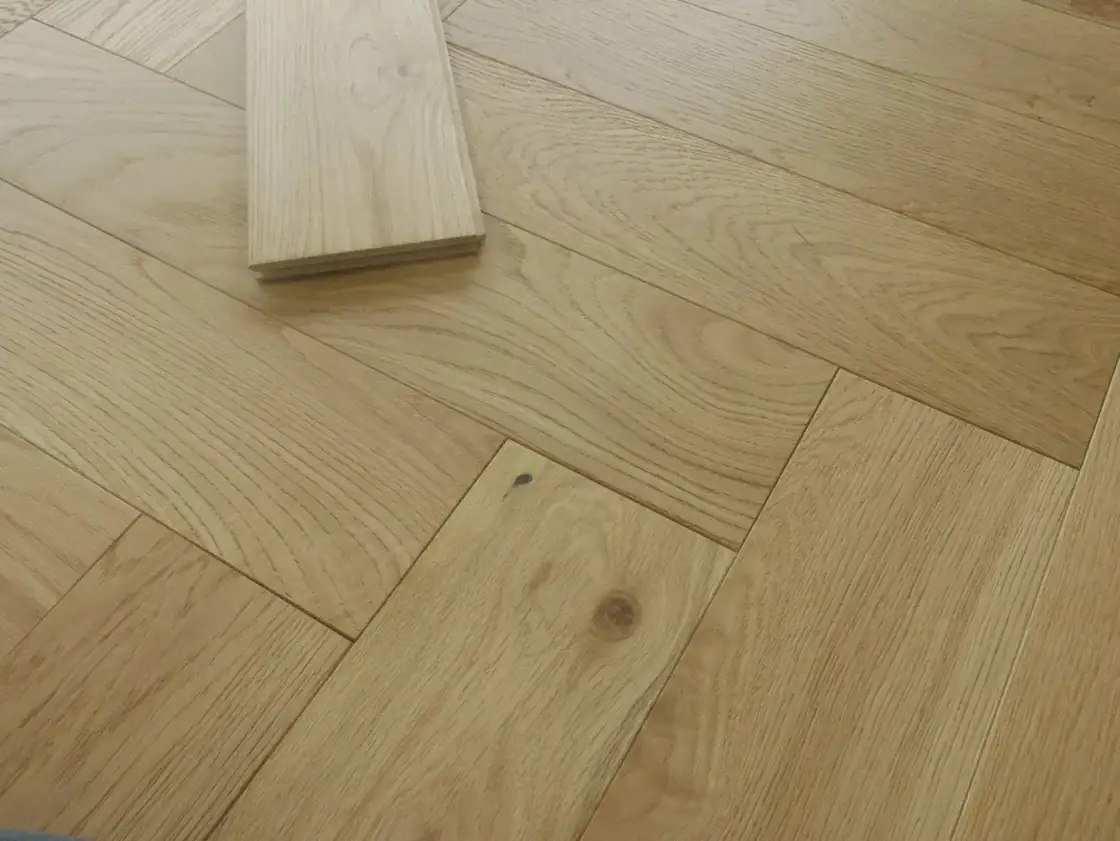
Engineered boards are far more stable than solid when the temperature below them changes. Look for a thickness of 14–20mm with a 3–6mm oak wear layer. Very thick boards insulate too well and the heating has to work harder.
Glue it down
Fully bonding the floor to the screed with a flexible MS polymer adhesive gives the best heat transfer and the least movement. Floating floors over heating work but there's an air gap, so the heating responds more slowly.
Commission the heating first
New screeds must be dry and the heating system run through a full warm-up and cool-down cycle before we fit. We test the screed moisture; if it's not ready, we wait rather than fit and hope.
Living with it
Keep the floor surface temperature at or below around 27°C, bring the heating up gradually after fitting, and avoid thick rugs that trap heat. Humidity in the house matters too — very dry winter air can open small gaps that close again in summer.
Questions
Does underfloor heating damage wood floors?
Electric or water underfloor heating?
Updated 2026-10 · 5 min read · by the BAJ Flooring family