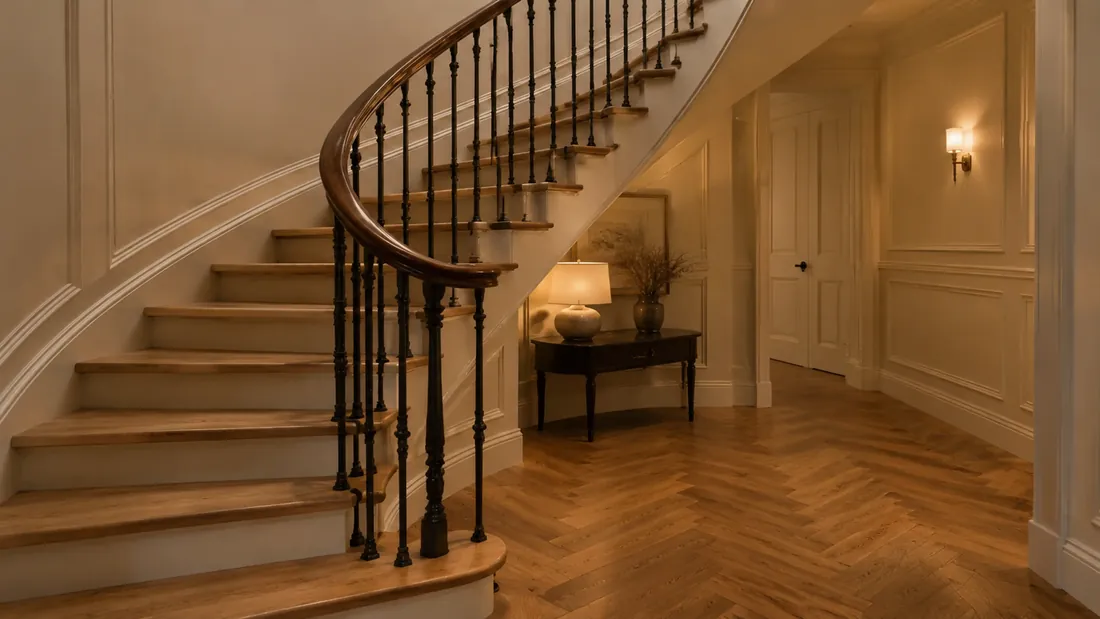
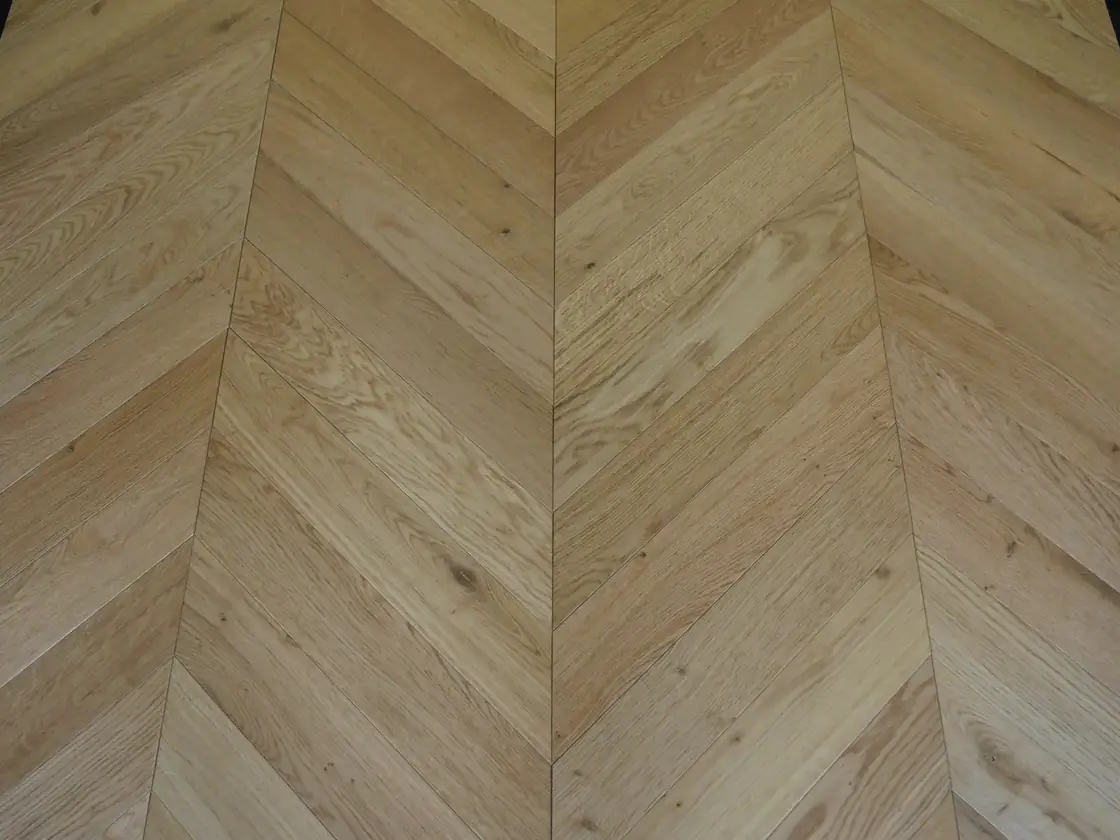
Both are parquet patterns, both look stunning — here's how they differ, which rooms they suit and what they mean for cost.
The shape of the block
Herringbone blocks are rectangles with square ends, laid at 90 degrees to each other so the pattern looks like a staggered zigzag. Chevron blocks have their ends cut at an angle (usually 45 or 60 degrees) so they meet in a clean, continuous point — a true V.
How they feel in a room
Herringbone is the classic. It has texture and movement, suits period homes, and hides slight imperfections well. Chevron reads as sharper and more contemporary; the strong arrow lines draw the eye down a hallway or across a large open-plan space.
Fitting and cost
Both take longer to lay than planks because every block is placed individually and the pattern must be set out from the centre of the room. Chevron tends to cost a little more: the angled cuts waste more timber and the lines have to be perfectly straight to look right.
Borders and direction
Both patterns can be finished with a single or double border of straight blocks, which frames the room and avoids awkward cuts at the walls. Direction matters — we usually run the pattern towards the main window or along the longest sightline.
Questions
Which is better for a small room?
Can I have herringbone over underfloor heating?
Updated 2026-10 · 4 min read · by the BAJ Flooring family